Change in Motion – Day 2 at the 2025 Equally Well Conference
Day Two of the Equally Well Conference was charged with energy and purpose. The theme was clear from speakers that improving physical health for people living with mental illness is not just a policy, it’s about real people, real lives, and how we can all play our role to make a difference.
Physical and Mental Health: Inseparable Priorities
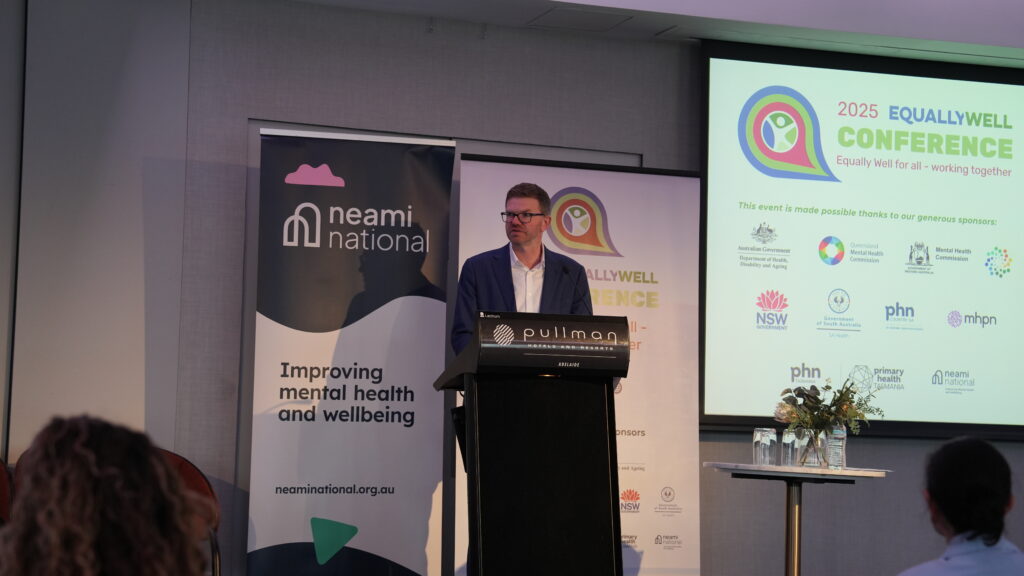
In his opening address, South Australia’s Minister for Health and Wellbeing, Chris Picton, set the tone for the day saying the work being done in SA is more than a roadmap – it’s a vision for a healthy future for all.
“It remains clear that physical and mental health are inseparable, and we need to continue to innovate and turn the evidence into practical action for change.”
“Innovation continues to grow and last year, 28% of people with mental illness in SA were vaccinated against preventable conditions. That’s progress, but we’re not done yet.”
In presenting further evidence from SA Minister Picton drew attention to the stark reality that people with mental illness are up to five times more likely to experience preventable health issues.
“Every action you take helps close these gaps,” Minister Picton reminded the audience as he spoke of the ultimate goal of a care system that must be “seamless, integrated, and person-centred.”
Innovation and cultural leadership
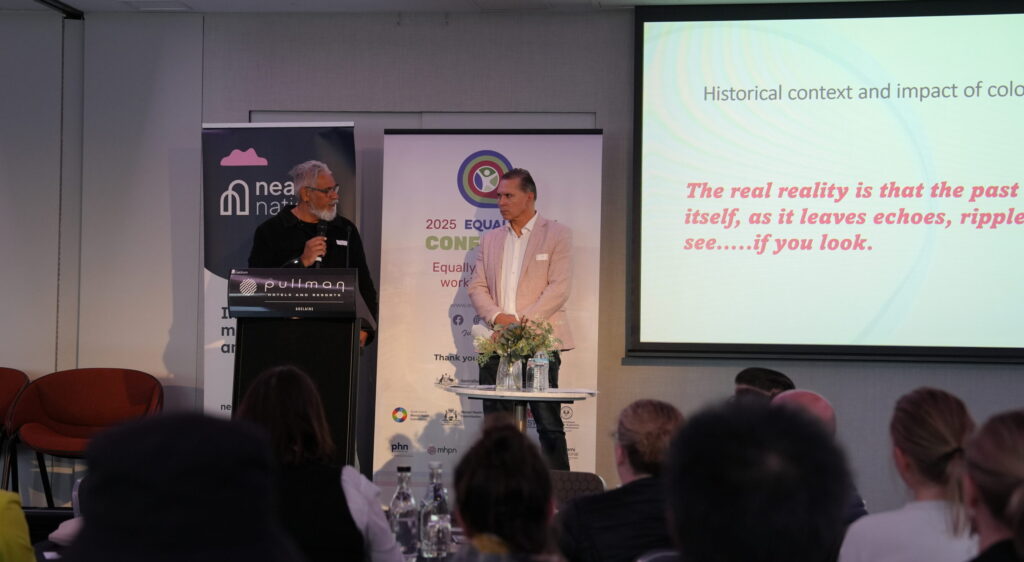
One of the most inspiring announcements of Day 2 came from Ian James and Robert Leidig, in their presentation outlining the plan for the first all-ages Aboriginal Mental Health and Wellbeing Service to be launched in Adeliade early in 2026.
Robert captured the spirit of the initiative by saying, “We’re not into correction, we’re into connection.” He explained that the centre is rooted in cultural identity and their job was to restore proud lineage and integrate 60,000 years of history into care.
“The reality is the past keeps asserting itself and it leaves echoes and ripples if you look. When I started, I struggled to see where an Aboriginal person could go for culturally appropriate care. This centre changes that.”
Backed by $10 million from the SA Government, the service blends traditional healing with modern health systems, ensuring continuity of care from early life to end of life.
Data as a connector to better physical health
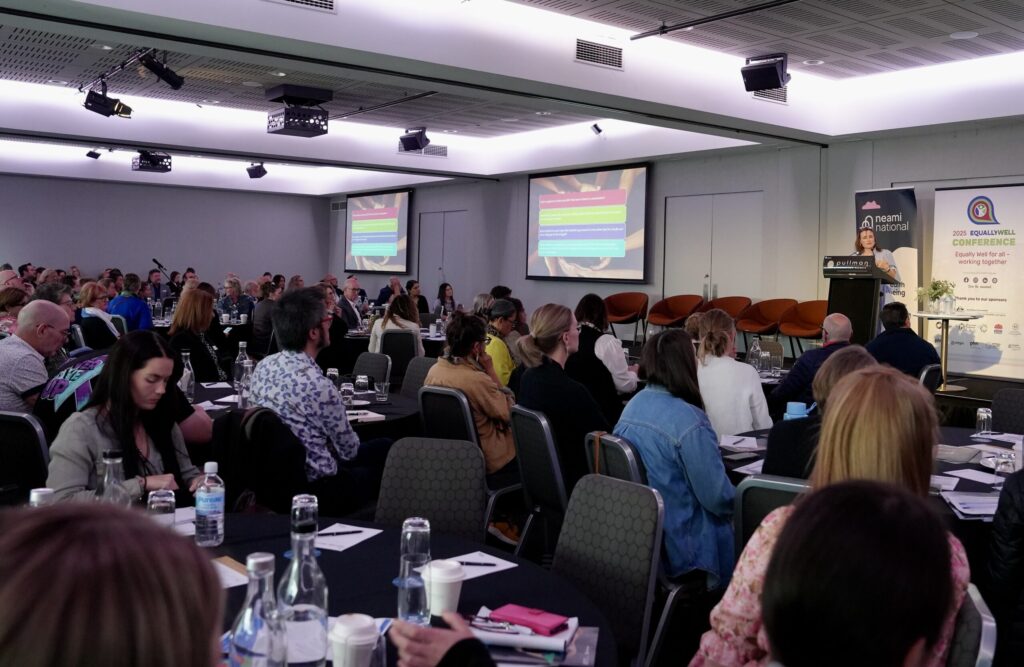
Joining the dots between data and care, Lisa Wilton and April Simes’ session focused on the power of data to deliver a whole picture of a person’s health journey in an innovative program from SA Health.
“We’re building confidence in the systems that support this work, creating dashboards that refresh every morning to provide up to date insights on a person’s contact with the system. It’s a work in progress, but collaboration is key.”
Their message was clear to consumers and health providers in the room that data is not just numbers but is a tool for connection and accountability.
What does good communication for building trust look like?
Sharing insights about her research on the invisible factors that influence communication to foster trust and build genuine collaborative relationships for change-makers, Communication Lead with Equally Well and Charles Sturt academic Victoria Erskine, opened up a reflection about the shared responsibility for role-modelling good communication in Collective Impact movements.
Early findings in her PhD project, highlight a critical need for clearer communication within organisations participating in complex social change and the importance of creating inclusive spaces for genuine community engagement and processes that value co-creation.
“By not paying attention to the communication factors that build trusted relationships in complex social change efforts, we risk the potential for impact by walking blindly into communication minefields.”
Engaging Communities and Lived Experience
A panel discussion explored how to embed lived experience in service design led by Equally Well Co-Chair John Allan. Insights from Deb Pratt, Qld Health Commission, Maureen Lewis from WA MH Commission, Phillip Chabrel, SA MH Commission and former NSW MH Commissioner Cath Laurey reminded the audience that engaging with community can be done in many different ways but above all it needs to be genuine.
Maureen, reflecting on the recent Productivity Commission review, warned that change would only happen nationally with a stronger broader level commitment.
“The current [Mental Health and Suicide Prevention] agreement is far from fit for purpose. We need psychosocial supports and an independent Mental Health Commission to monitor progress.” Calls for a National Mental Health Declaration and a suicide prevention strategy underscored the urgency for long-term clarity and vision.
Stories that inspire change
Dr. Simone McCallum shared her personal journey of establishing herself as a mental health GP through a genuine desire to support both physical and mental health in her Melbourne community. After a career turn towards psychiatry, Simone found her calling in General Practice.
“I couldn’t let go of the whole person. In my heart, I am a GP. The best way to help patients with severe mental illness is to give them the best physical health care.”
Her work embedding GPs in mental health teams is transforming care and was an inspiring model of what can be done to change embedded systems of practice models.
“What’s different now [in her new role] is that GPs are truly valued, co-located in clinics and part of the team.”
Mental Health Nurse Regina Cai added her perspective: “Coming from China, where mental health is still stigmatised, I wanted to talk about it more. It’s not good enough to ignore physical health needs in mental health care.”
Smoking Cessation program sends message of hope
Michele Quirk challenged myths about smoking in a moving presentation that really connected with the audience about the message of hope for people living with mental illness in their journey to quit smoking.
The powerful message was based on her professional learnings and lived experience of the challenges of quitting smoking while managing her mental illness.
“Quitting smoking changed my life. Every milestone mattered,” she said.
“People with mental health issues want to quit as much as anyone. Every conversation matters, with family, friends and clinicians. It can seem impossible, but the benefits are insurmountable.”
Final Panel session
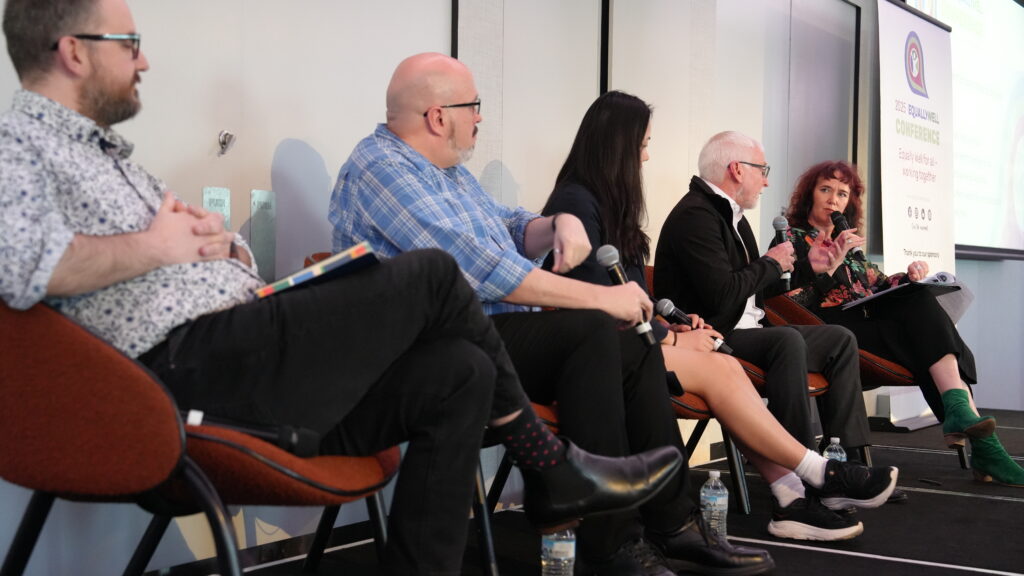
Expertly facilitated by MC Natasha Mitchell, the final panel of the conference asked what would success for lived experience centred change should look like.
Dave Peters, Geoff Harris, Julia Kim and Tom Johnson shared their perspectives with suggestions including; improving medicare rebates for longer consults to address physical and mental health issues; creating a professional lived experience workforce that allows people to earn a proper living; and removing the stigma and discrimination faced by lived experience professionals.
Tom summed up the group sentiment well; “Co-design is not a vibe and we need to be authentic about it. Be clear about what you’re doing and why.”