How Good Can It Get? – Day 1 at the 2025 Equally Well Conference
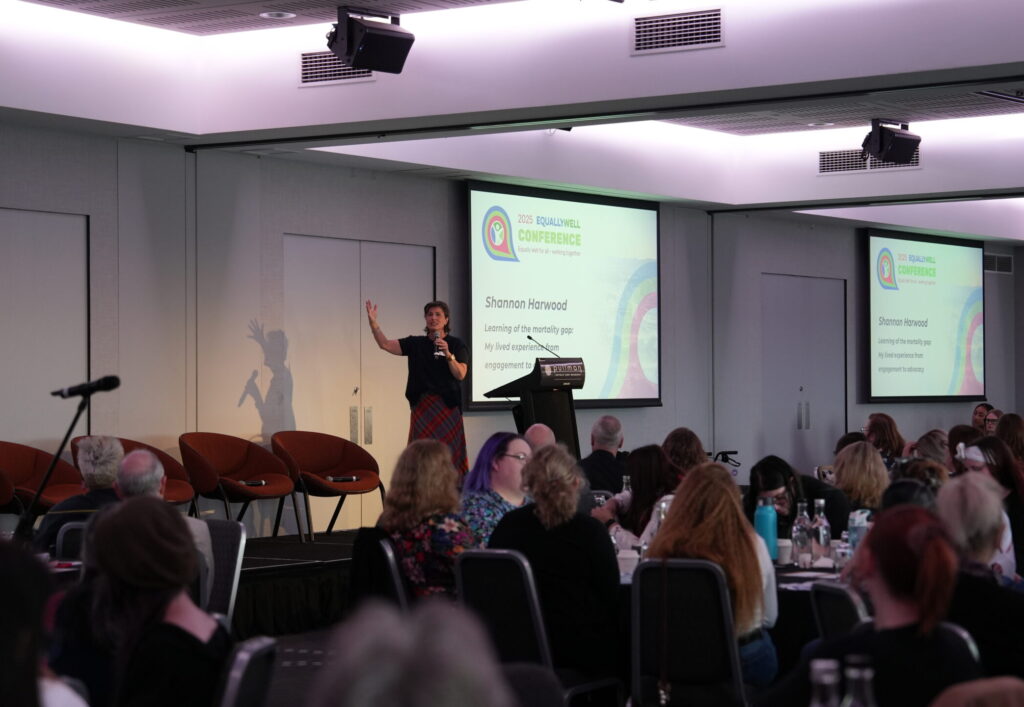
“How good can it get?” That was the powerful question posed by lived experience advocate, and Equally Well ambassador Shannon Harwood in her opening address at the 2025 Equally Well Conference in Adelaide.
The personal story of lived experience advocacy followed a warm Welcome to Country from man Adam Francis who reminded delegates to live, celebrate, work, play and embrace our community and culture “We can’t change our history but can change what we look into the future”.
Equally Well Co-Chair, Dave Peters, shared a lived experience acknowledgement reflecting that while there is often despair at the state of the health system that has caused harm there hope for a fairer and more equal health system is stronger than ever.
John Allen’s reflections on the 10 year history of Equally Well movement gave an honest description of how far the movement has come in that time.
Imagining a different future
Shannon’s inspirational message, set the tone for a day one of the two day event, reminding the audience that despite the life-changing reality of living with shorter life expectancy, there is optimism and power in being part of the movement for the shared commitment to closing the shocking life expectancy gap for people living with mental health conditions.
Shannon’s keynote, drawing on her own recovery journey from over 30 years of living with bipolar disorder, spoke to her determination to challenge the pervasive narrative of chronic hopelessness and instead imagine what might be possible when we consider new perspectives for holistic, person-centred care.
“I refused to take on the notion that I was a hopeless case. I was imaging a future that was different.”
Shannon told the audience that the mortality gap isn’t just a statistic, it’s a deeply personal issue that impacts identity, dignity, and the sense of self.
“There is no advocacy without hope. There is no advocacy when we are not able to acknowledge a possibility that do not yet exist.”
Driving Conversations that matter
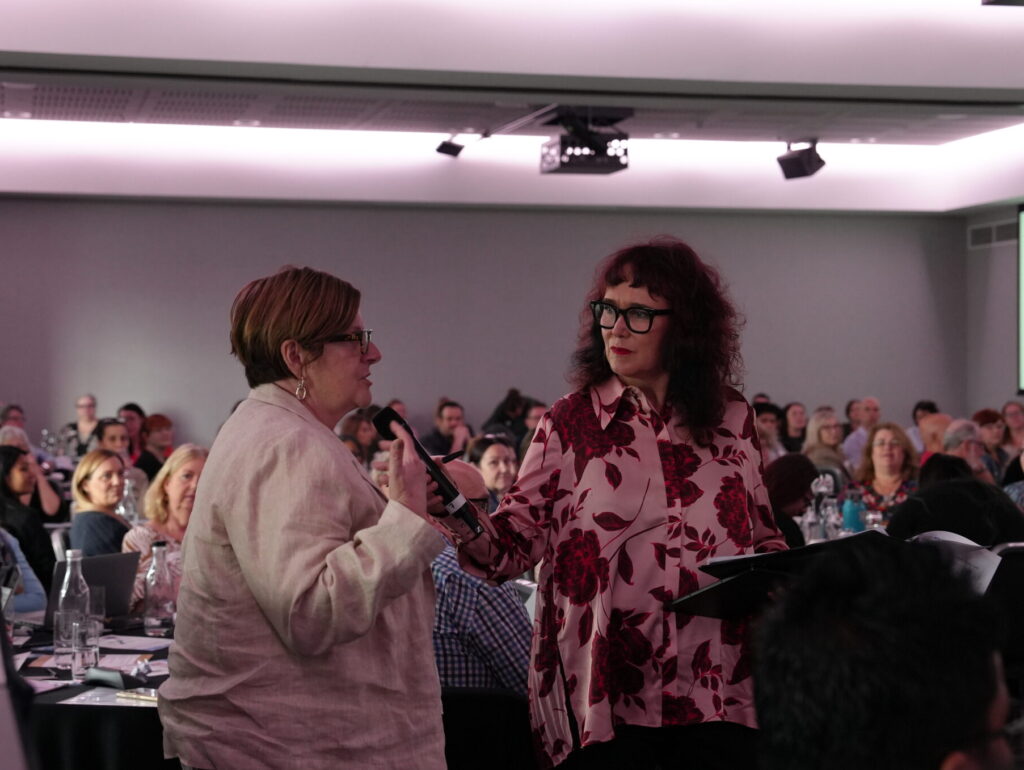
ABC journalist and mental health advocate Natasha Mitchell kept the momentum going throughout the morning, expertly facilitating discussions on a broad range of issues from the floor. Her ability to engage the 500 strong audience both in the room and online, generated meaningful conversations that ensured that all perspectives and contributions were valued.
Key themes emerged throughout the day:
- Building a culture of change across mental and physical health sectors is possible
- Exploring new models of care, measuring impact, and ensuring accountability turns a shared commitment for change into action
- Embedding lived experience perspectives in research, service design and delivery can deliver life-saving results
- Persistence and innovation are driving change and building bridges between mental and physical health divides in a growing body of evidence for new and innovative models of care.
A National Call to Action
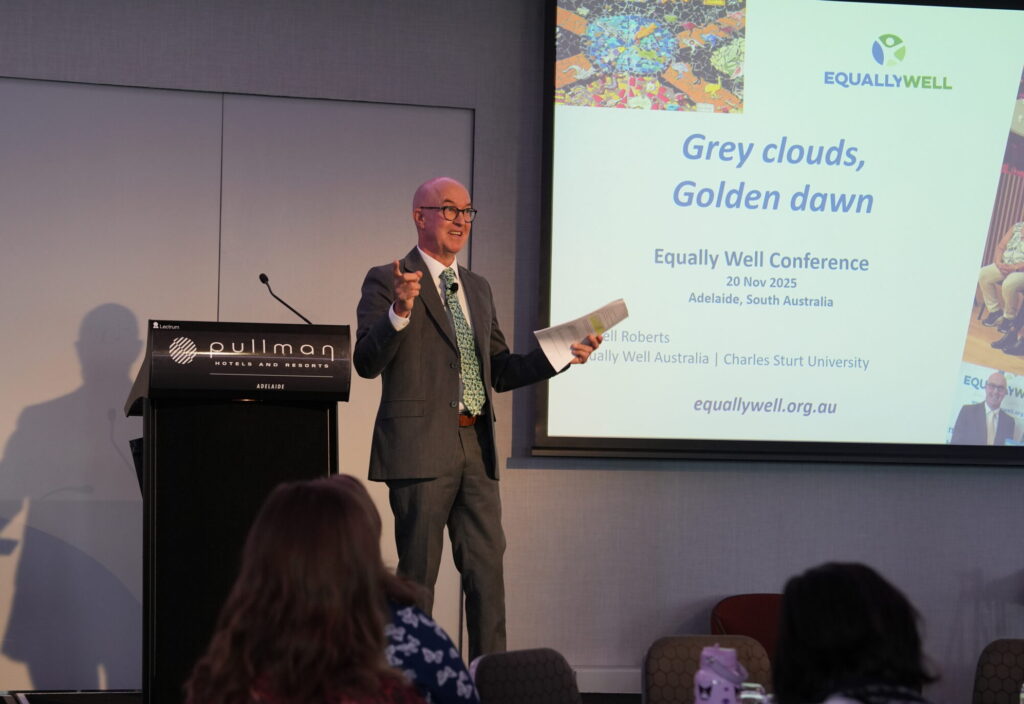
Equally Well National Director Professor Russell Roberts continued the theme of optimism, sharing inspiring stories of bridges being built between mental and physical health services across Australia. Drawing on the history of the women’s suffrage movement in SA that signalled a global movement for women’s empowerment, Russell issued a passionate national Call to Action, urging delegates to sign the petition to Government Ministers and be part of history.
The message was clear, that urgent action needed to be taken so we don’t continue to rob people of up to 15 years of their lives, when we have the means now to change.
“There are things we can do right now that will save lives; this is a human rights issue, and together, we can make it happen.
“That people with mental illness are two to six times more likely to die prematurely from preventable health conditions than the rest of the population when we have the potential to do something about it is a national scandal.”
Practical Solutions showcasing Equally Well in action
The afternoon panel session showcased Equally Well in action, with practical examples from mental health in-patient care nurse, Primary Health Networks, collaborative clinical initiatives and community mental health services.
Fresh from the stage at the Society for Mental Health Research conference, Professor Scott Clark brought cutting-edge research into the conversation, exploring new pathways to treatment that integrate mental and physical health, offering evidence-based hope for the future.
Pharmacist Kristie Brown from the Pharmacy Guild of Australia added another dimension, asking: What is a pharmacist’s full scope of practice? Her presentation highlighted the critical role community pharmacists can play in improving physical health outcomes for mental health consumers. Drawing on the trusted relationships built over months and years, Kristie presented emerging evidence that demonstrates how pharmacists are uniquely positioned to
provide physical health checks and screening for conditions such as diabetes, heart disease, and stroke, helping to catch those who might otherwise slip through the cracks.
Showcasing innovation and action
The day ended on a high note with 20 presentations across four rooms, each showcasing diverse case studies of Equally Well initiatives in action. From lived experience-led projects to co-designed service improvements, innovative shared-care models and exploring the impacts of peer-led workforce, these sessions demonstrated that there is a strong appetite across the health sector to finding collaborative solutions to closing the physical health life expectancy gap for people living with mental illness.
The momentum for change Is real
Day One of the 2025 Equally Well Conference showed the maturity of the movement, fuelled by hope, collaboration, and a shared vision for longer, healthier lives for people living with mental illness.
The full program of speakers and presentations, are available on the Equally Well event website.