Back to News & Events

The missing mammograms in mental health

The missing mammograms: why women using mental health services are missing breast screening

BreastScreen Australia is one of Australia’s great public health success stories. For more than three decades, free mammography screening has helped detect breast cancer earlier. Participation in breast screening is estimated to reduce breast cancer mortality by between 30% and 49%, making it one of the most effective population-level cancer prevention initiatives available1.

But not everyone benefits equally. A recent study found that only 30% of women using mental health services in New South Wales participated in breast cancer screening, compared with 53% of other women of the same age2. The gap persisted even after accounting for differences in age, socioeconomic status, and rurality. More than 7,000 additional women would have received screening if participation matched the broader population.

This is not a small disparity. It represents thousands of missed opportunities for early detection, earlier treatment, and potentially lives saved. The obvious question is why.


Many explanations have been proposed, including fragmented healthcare, practical barriers, competing life priorities, and poor integration between physical and mental health services. These are all likely contributors, but there may be another factor that has received surprisingly little attention in discussions about breast screening and mental health.

Trust. Successful participation depends on trust, culturally safe care, tailored communication, community engagement, and positive experiences with healthcare providers.

Beyond access

When participation in screening programs is low, health systems often focus on access. Can people reach the service? Do they know about it? Can they afford it? These are important questions. But access is only part of the story.

A recently published review of the National Breastscreen program found that discrimination, racism, stigma, health system barriers, and lack of trusting relationships as factors contributing to lower screening participation and poorer outcomes1.

The report highlighted that interventions which build trust, provide navigation support, engage community leaders, offer culturally tailored education, and strengthen relationships are often more effective than simply increasing awareness or sending invitations.

This raises an important question: If trust and discrimination influence screening participation in other priority populations, why are they rarely discussed in relation to people living with mental illness?

research snapshot

The missing risk factor

For decades, people living with mental illness have described experiences of stigma and discrimination within healthcare.

They describe not being listened to, feeling judged, labelled, or treated differently because of a mental health diagnosis, and their physical symptoms being dismissed as psychological.

When people repeatedly encounter stigma or discrimination, trust becomes eroded. Reminder letters become easier to ignore, appointments become easier to postpone, and healthcare becomes something to avoid rather than engage with.

Discrimination directly influences participation in cancer screening, and therefore early detection of cancer and treatment pathways.

The international evidence supports this:

  • A 2024 prospective cohort study found that people reporting higher levels of discrimination had lower trust in healthcare providers, and were less likely to participate in screening mammography3.
  • A 2026 population study found that perceived discrimination remained associated with lower breast cancer screening rates even after accounting for socioeconomic factors, neighbourhood characteristics, health insurance, and other social determinants of health4.

Discrimination is not just a social issue – it’s a pathway through which health inequities emerge.

Screenshot 2026-10-01 at 17.27.07

Why trust matters for prevention

A mammogram takes only a short appointment, but getting to that appointment often requires years of accumulated trust:

  • Trust that healthcare providers will listen.
  • Trust that concerns will be taken seriously.
  • Trust that the experience will be safe and respectful.
  • Trust that seeking care will be worthwhile.

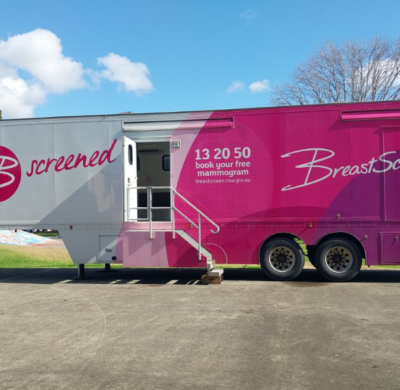
BreastScreen Australia already addresses many traditional access barriers. Screening is free, invitations are proactively sent, mobile screening services travel to regional and remote communities – the infrastructure exists, yet substantial inequities remain.

Perhaps this is because prevention depends on more than infrastructure – it depends on relationships.

Where do we go from here?

If we are serious about improving cancer outcomes for people living with mental illness, we need to think beyond invitations, reminders, and appointment availability.

The BreastScreen Australia review1 notes that improving participation among priority populations requires strategies that build trust, strengthen relationships, and recognise the needs of communities that have historically been underserved.

People living with mental illness deserve the same attention.

  • We need stronger partnerships between mental health and primary care services.
  • We need physical healthcare navigation and care coordination.
  • We need peer workers and lived experience practitioners to be recognised as important contributors to preventive healthcare engagement.
  • And, we need healthcare services that people experience as respectful, welcoming, and safe.

Because trust may be one of the most important and least recognised determinants of cancer prevention.


References:

  1. Final Report: Evidence Synthesis and Review, BreastScreen Australia, Department of Health and Aged Care, 2024 (Publication date: 4 August 2026).
  2. Lambeth et al. (2024). Breast cancer screening participation in women using mental health services in NSW, Australia: a population study. Social Psychiatry and Psychiatric Epidemiology.
  3. Hernandez et al. (2024). Associations Between Perceived Discrimination, Screening Mammography, and Breast Cancer Stage at Diagnosis: A Prospective Cohort Analysis. Annals of Surgical Oncology.
  4. Morley et al. (2026). Evaluating the association between upstream perceived individual and neighborhood determinants of health and intensity of breast cancer screening. American Journal of Epidemiology.


Download the Factsheet
BreastScreen-NSW-van-900×600-1