Public discussions about physical activity often focus on doing more. More steps, more minutes, more activity.
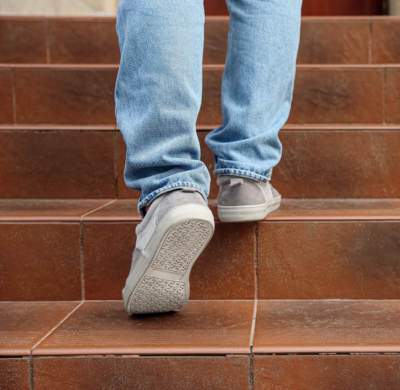
But this highlights that increases in effort during everyday activities can have substantial health benefits, which may be more realistic than finding large amounts of additional time. This could mean walking faster, running for the bus, choosing the stairs, picking up the pace when commuting.
While structured exercise remains one of the most effective ways to improve physical and mental health, the findings challenge the assumption that meaningful health gains are only available to people who become regular exercisers. Perhaps the public health challenge is not simply persuading everybody to exercise, but in making healthy movement a natural part of everyday life.
Prevention happens outside healthcare
Healthcare systems tend to approach prevention using clinics, appointments, programs, and interventions. We develop guidelines, create referral pathways, and prescribe exercise.
But the activities highlighted in these studies occur largely outside health services, while people are living their lives. They happen on staircases, footpaths, train platforms, in homes, workplaces and neighbourhoods in between healthcare encounters.
This shifts attention away from what clinicians do and towards the environments in which people live. Prevention depends not only on healthcare services but on transport systems, urban design, housing, employment, community infrastructure, and everyday routines.
A bout of brisk stair climbing may not feel like healthcare, but the evidence suggests it can contribute to health outcomes in meaningful ways. Perhaps the most important implication is that physical activity is not simply an individual behaviour – it is a product of systems.
Whether someone climbs stairs depends partly on the building design. Whether they walk depends partly on neighbourhood safety, connectivity and infrastructure. Whether they use active transport depends partly on public policy. Whether they leave home at all may depend on social connection, inclusion, mental health, employment, transport and community participation.
Physical activity emerges from the environments and systems we create, and how inclusive and accepting our society is. This means that promoting physical activity cannot rely solely on encouraging individual behaviour change. It also requires attention to the social, environmental and structural conditions that make movement possible.